Showing posts with label Mike Dubruiel. Show all posts

Sunday, August 9, 2026

St. Lawrence - August 10

    A short interesting article on the iconography of St. Lawrence:


lawrenceAngelico.distributesTreasure


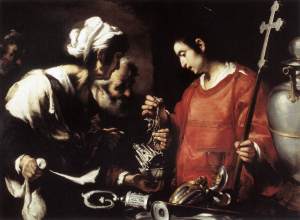
St. Lawrence by Strozzi


The earliest portrait of the saint that I have actually seen is a 5th-century fresco that portrays him as a youthful man, tonsured and wearing the dalmatic of a deacon. The youth, the tonsure, and the dalmatic will stay with him through sixteen more centuries of religious art, with only a few exceptions (example without a dalmatic, example with lush hair). Sometimes the saint will also be pictured with a maniple, a length of cloth that was worn over the left forearm by deacons and priests at Mass, as in the first picture at right. In one case that I have seen, the artist managed to sneak in a bit of the "stole," another vestment that deacons wear at Mass underneath the dalmatic.3
The fresco painter apparently did not include a gridiron. Some of the plaster has fallen away at the bottom, so we cannot be sure. But by the 6th century, the saint is strongly associated with the gridiron, as in the first image at left. In the ensuing centuries, it is by far his most common attribute (example). In most portraits it is shown in a diminutive size as a mere attribute, and in one painting it is reduced to just a grid pattern on the dais beneath Lawrence's throne.
In the Golden Legend the executioners also apply red-hot pitchforks to Lawrence's body, so this becomes another attribute, sometimes used instead of the gridiron (second picture at right).
Another attribute is based on two of the miracles ascribed to St. Lawrence. One involved a heavy golden chalice that the emperor Henry II had given to the Church of St. Lawrence in Eichstätt. When Henry died and his misdeeds were piled up on one side of the scale, the devils hoped to gain his soul. But then St. Lawrence put the chalice on the other side, and Henry was safe. In anger, one of the devils broke off a piece of the chalice, which he referred to as a bowl. In the other miracle a deacon in St. Lawrence's church in Milan dropped a crystal chalice. It broke into pieces, but upon the deacon's prayers St. Lawrence reasssembled it as good as new. Owing to these legends, in some images the saint holds a chalice-like bowl, sometimes with a broken-off piece, as in the third image on the right. Another influence on the chalice attribute is Augustine's remark that St. Lawrence served the church in Rome and "it was there that he administered the sacred chalice of Christ's blood; there that he shed his own blood for the name of Christ."


-Amy Welborn 


Saturday, August 8, 2026

Edith Stein - August 9

      amy-welborn2edith-stein


Today: St. Teresa Benedicta of the Cross - Edith Stein. 

She's in the Loyola Kids Book of Saints by Amy Welborn


 Over 40 saints' lives,written at a middle-school reading level.

  I. Saints are People Who Love Children St. Nicholas,St. John Bosco, St. Elizabeth Ann Seton, Blessed Gianna Beretta Molla

Saints Are People Who Love Their Families St. Monica,St. Cyril and St. Methodius, St. Therese of Lisieux,Blessed Frederic Ozanam,

 Saints Are People Who Surprise OthersSt. Simeon Stylites,St. Celestine V,St. Joan of Arc,St. Catherine of Siena

  Saints Are People Who Create St. Hildegard of Bingen,Blessed Fra Angelico,St. John of the Cross,Blessed Miguel Pro

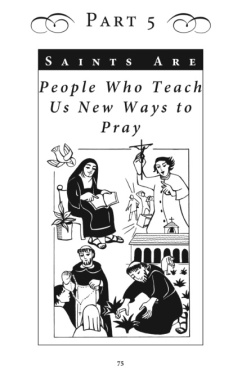
  Saints Are People Who Teach Us New Ways to Pray St. Benedict,St. Dominic de Guzman,St. Teresa of Avila,St. Louis de Monfort

  Saints Are People Who See Beyond the Everyday St. Juan Diego, St. Frances of Rome, St. Bernadette Soubirous, Blessed Padre Pio

  Saints Are People Who Travel From Home St. Boniface, St. Peter Claver, St. Francis Xavier, St. Francis Solano, St. Francis Xavier Cabrini

  Saints Are People Who Are Strong Leaders St. Helena, St. Leo the Great, St. Wenceslaus, St. John Neumann

  Saints Are People Who Tell The Truth St. Polycarp, St. Thomas Becket, St. Thomas More, Blessed Titus Brandsma

  Saints Are People Who Help Us Understand God St. Augustine of Hippo, St. Jerome, St. Patrick, St. Thomas Aquinas, St. Edith Stein

  Saints Are People Who Change Their Lives for God St. Ambrose, St. Gregory the Great, St. Francis of Assisi, St. Ignatius of Loyola, St. Camillus de Lellis, St. Katharine Drexel

  Saints Are People Who Are Brave St. Perpetua and St. Felicity, St. George, St. Margaret Clitherow, St. Isaac Jogues, The Carmelite Nuns of Compiegne, St. Maximilian Kolbe

  Saints Are People Who Help the Poor and Sick St. Elizabeth of Hungary, St. Vincent de Paul, St. Martin de Porres, Blessed Joseph de Veuster

  Saints Are People Who Help In Ordinary Ways St. Christopher, St. Blaise, St. Anthony of Padua, St. Bernard of Montjoux


  Saints Are People Who Come From All Over the World Blessed Kateri Tekakwitha, St. Paul Miki, Blessed Peter To Rot, Blessed Maria Clementine Anuarite Nengapeta

Friday, August 7, 2026

August 8 - St. Dominic

       EPSON MFP imageamy_welborn


He's in the Loyola Kids Book of Saints by Amy Welborn
The Loyola Kids' Book of Saints

 Over 40 saints' lives,written at a middle-school reading level.

  I. Saints are People Who Love Children St. Nicholas,St. John Bosco, St. Elizabeth Ann Seton, Blessed Gianna Beretta Molla

Saints Are People Who Love Their Families St. Monica,St. Cyril and St. Methodius, St. Therese of Lisieux,Blessed Frederic Ozanam,

 Saints Are People Who Surprise OthersSt. Simeon Stylites,St. Celestine V,St. Joan of Arc,St. Catherine of Siena

  Saints Are People Who Create St. Hildegard of Bingen,Blessed Fra Angelico,St. John of the Cross,Blessed Miguel Pro

  Saints Are People Who Teach Us New Ways to Pray St. Benedict,St. Dominic de Guzman,St. Teresa of Avila,St. Louis de Monfort

  Saints Are People Who See Beyond the Everyday St. Juan Diego, St. Frances of Rome, St. Bernadette Soubirous, Blessed Padre Pio

  Saints Are People Who Travel From Home St. Boniface, St. Peter Claver, St. Francis Xavier, St. Francis Solano, St. Francis Xavier Cabrini

  Saints Are People Who Are Strong Leaders St. Helena, St. Leo the Great, St. Wenceslaus, St. John Neumann

  Saints Are People Who Tell The Truth St. Polycarp, St. Thomas Becket, St. Thomas More, Blessed Titus Brandsma

  Saints Are People Who Help Us Understand God St. Augustine of Hippo, St. Jerome, St. Patrick, St. Thomas Aquinas, St. Edith Stein

  Saints Are People Who Change Their Lives for God St. Ambrose, St. Gregory the Great, St. Francis of Assisi, St. Ignatius of Loyola, St. Camillus de Lellis, St. Katharine Drexel

  Saints Are People Who Are Brave St. Perpetua and St. Felicity, St. George, St. Margaret Clitherow, St. Isaac Jogues, The Carmelite Nuns of Compiegne, St. Maximilian Kolbe

  Saints Are People Who Help the Poor and Sick St. Elizabeth of Hungary, St. Vincent de Paul, St. Martin de Porres, Blessed Joseph de Veuster

  Saints Are People Who Help In Ordinary Ways St. Christopher, St. Blaise, St. Anthony of Padua, St. Bernard of Montjoux


  Saints Are People Who Come From All Over the World Blessed Kateri Tekakwitha, St. Paul Miki, Blessed Peter To Rot, Blessed Maria Clementine Anuarite Nengapeta

Thursday, August 6, 2026

Catholic Homeschool Resources 2026

      "amy welborn"


"amy welborn"
Use the Loyola Kids Book of Bible Stories by Amy Welborn in your homeschool this year.

Experience the Bible as a family!

Written by popular Catholic children's author Amy Welborn, this beautifully illustrated collection of warm and engaging Bible stories for children and their families is arranged in a uniquely Catholic way—based on the liturgical year and the order in which they are proclaimed during Mass. Divided into five sections—Advent, Christmas, Ordinary Time, Lent, and Easter—each section is subdivided into Old and New Testament stories.
From the Creation to St. Paul, the charming illustrations in Loyola Kids Book of Bible Stories and Welborn's friendly writing style turn reading the Bible into an experience that draws families closer together and deeper into the heart of the Church.

Wednesday, August 5, 2026

The Transfiguration - August 6


From  Living Faith in 2024: 

In the midst of suffering, it can be challenging to not be simply overwhelmed by the moment. The pain, loss, confusion and disorientation can make us forget what had anchored us in hope and love, perhaps even the day before.

More

And from the 2020 Book of Grace-Filled Days by Amy Welborn

"amy welborn"


Before Jesus takes Peter, James and John up on the mountain, he had been conversing with them and the other apostles. It was the moment when he asked them Who do people say that I am?  And Who do you say that I am?  Peter had, of course, responded in faith and truth: You are the Messiah, the Son of the Living God. 

The conversation doesn’t end there, for Jesus continues, telling them about the way of this Messiah, his way – a way of suffering. Peter can’t believe it, Jesus rebukes him, and lets his friends and disciples know that anyone who wishes to follow him will be taking up a cross.

And then they climb the mountain.


Here's the related passage from the Loyola Kids Book of Bible Stories.

Click on the images for a larger version. Included are the first page of each narrative, and the last section, so you can get a sense of the structure: a retelling of the Scripture, and then, at the end, a tie-in of sorts to Catholic spirituality and/or practice, then a question to think about and a short prayer.


Tuesday, August 4, 2026

Prove It Books by Amy Welborn


Prove It; Prayer

Section 1 I Don’t Pray Because….
  1. …God’s In My Heart All the Time
  2. …God Already Knows Everything I Feel: I Don’t Have to Tell Him
  3. …God’s In Control: My Prayer Doesn’t Influence Him
Section II I Want to Pray, But It’s Difficult Because…
  1. …I’m Too Busy
  2. …I Don’t Know Where to Start
  3. …Meditation is Weird
  4. …I Can’t Concentrate
  5. …The Bible is Too Hard to Read
  6. …Memorized Prayers Are Meaningless
  7. …I don’t Know Whether It’s God I’m Hearing, or Just Me
Epilogue: Prayer and the Rest of Your Life

Excerpt from Prove It: Prayer by Amy Welborn

A resource for Catholic youth ministry and Catholic catechesis of youth. 


Monday, August 3, 2026

St. John Vianney - August 4

      St. John Vianney - August 4. 


"john Vianney"


by Amy Welborn

Diary of a Country Priest was inspired by his life and ministry.

Note:This piece is one of a series on great Catholic fiction writers that I penned for Ligourian Magazine several years ago. My word count limit was - get this - 540 words. Unbelievable. Well, it was good money for the number of words,I'll say that. So if you're annoyed by the brevity of this piece, at least you know why it's so short now. Of course, there is much more to say on this book, as well as the very interesting life of Bernanos himself.

In the late 19th and early 20th century a philosophical perspective called positivism ruled the intellectual climate in France. Positivists like Emile Durkheim and Auguste Comte claimed that all one can know about human life is what can be observed and that the laws of behavior and society discerned from these observations should be used to organize human life.
Into this scientifically-based and utterly materialistic mileu stepped, one by one over the decades before and just after the First World War, a group of writers who formed what we now call the French Catholic Literary Revival. Francois Mauriac, Charles Peguy, Julien Green and Leon Bloy rejected positivism and reclaimed a vision of human beings essentially defined, not by scientific law, but rather by our relation to God and struggle with evil. One of the finest writers of this group was George Bernanos, author of Diary of a Country Priest.

Diary of a Country Priest, first published in 1936, is just what the title suggests: the fictional journal of a young curate in rural France. The premise may seem simple, but in Bernanos’ hands it emerges as a rich work in which the reader encounters the injustices of French society, the emptiness of an intellectual system that rejects God, the failure of the Church to fully embody Christ’s love for the poor, and above all, the power of a life dedicated to God.

The young priest whose life absorbs us in this novel has come from a background of poverty through seminary into this, his first parish experience, to which he is utterly dedicated. Besides conducting his sacramental duties, he commits himself to visit every family in his parish. He teaches catechism classes and attempts to organize a club for young men. He visits the sick, buries the dead, lives at a substistence level and is bedeviled by a serious illness that is ultimately diagnosed as stomach cancer, but not before it is mistaken for alchoholism by gossipy villagers.

Aside from these daily ministrations and struggles, Bernanos offers us his view of French church and society through the conversations the priest has with a variety of people, ranging from the atheist physician Delbende, the troubled child Seraphita who spreads rumors about the young priest at every opportunity, the more relaxed older priest de Torcy and most powerfully the deeply wounded local countess, who harbors bitter anger at God for death of her son.

What makes Diary of a Country Priest a novel that is read just as much for its spiritual value as well as its literary quality lies in the complex, realistic life of faith Bernanos constructs for his main character, a faith which stumbles in darkness at times, but is on the whole fervent, selfless and Christlike, even in the hostile reactions it sometimes evokes.


The final touch that heightens the personal drama in the priest’s soul is that he believes himself, if not a total failure, at the very least a terribly poor instrument of God’s grace. But what the reader discerns through the unaffected words is that even as he cannot see it himself, the effect of his witness and suffering on others is profound and powerfully embodies the words he speaks on his own deathbed: “Grace is everywhere…” - Amy Welborn

Sunday, August 2, 2026

The Psalms for Children by Amy Welborn

       "amy welborn"


A Child's Book of Psalms by Amy Welborn  is a hardcover introduction to the Psalms.  It includes many of the Psalms themselves, and an introduction - written by me - explaining what the Psalms are and how they have been prayed by Jewish and Christian people over the centuries, and still are today.

(Illustrated selections from 22 of the Bible s best-loved Psalms. Author Amy Welborn explains the history, background, and types of Psalms in an introduction and two supplemental chapters. Includes a map and visual history of the Holy Land from Abraham through Solomon. Author: Amy Welborn Format: 61 pages, Hardcover Publisher: C. D. Stampley Enterprises (September 2007))

Saturday, August 1, 2026

August: Immaculate Heart of Mary

   Every month of the year has a particular devotion attached to it. In August, it’s the Immaculate Heart of Mary.

It’s a tradition I highlight in the Loyola Kids Book of Seasons, Feasts and Celebrations –


"amy welborn"


From the Loyola Kids Book of Catholic Signs and Symbols. by Amy Welborn. 


"amy welborn"


From Catholic Culture:


The month of August  is dedicated to the Immaculate Heart. Since the 16th century Catholic piety has assigned entire months to special devotions. The month of August is traditionally dedicated to the Immaculate Heart of Mary. The physical heart of Mary is venerated (and not adored as the Sacred Heart of Jesus is) because it is united to her person and is the seat of her love (especially for her divine Son), virtue, and inner life. Such devotion is an incentive to a similar love and virtue.

This devotion has received new emphasis in this century from the visions given to Lucy Dos Santos, oldest of the visionaries of Fatima, in her convent in Tuy, in Spain, in 1925 and 1926. In the visions Our Lady asked for the practice of the Five First Saturdays to help make amends for the offenses committed against her heart by the blasphemies and ingratitude of men. The practice parallels the devotion of the Nine First Fridays in honor of the Sacred Heart.


Thursday, July 30, 2026

Amy Welborn in Living Faith

   Amy Welborn is a contributor - five devotions per issue -  to the Living Faith daily devotional .


"amy welborn"


Today, July 31:


I’m no prophet, but isn’t the dynamic Jesus describes here much the same? A prophet—Jeremiah, and the Lord himself—has a perspective gained, not just from experience but from eternal insight that can see far beyond what our own narrow viewpoint reveals. Do we resent this and cling to our own narrowness—or do we humbly and gratefully listen?


MORE


July 6:


An acquaintance of mine was running in a marathon, and I was interested in the finish, so I clicked on the visual feed of racers crossing the line. As I watched, I felt inspired. Not by the big winners, though, the pros obviously in shape and position to grab the glory. No, it was the stragglers, dogged and exhausted, who got my attention. They barely jogged, walked and limped across the finish line. But they weren’t sad about their placement; rather, they were jubilant. They’d accomplished their goals. They had not given up!


MORE


 May 10:


Well, Jesus gives us a “TL;DR” here in case we can’t be bothered—or have forgotten—all that he teaches us in his words and deeds: in case we’ve gotten distracted by issues, arguments or even mystical quests, in case we’ve arrived in a place where we excuse our self-serving views and pursuits with the perennial, “Well, I’m sure what Jesus really meant was…


MORE


April 23:


I can sometimes allow my understanding of myself, my life and God to stagnate. I assume I get it, that I’ve got the answers for all the good—and bad—questions and challenges. 

But is that really so? Is what I think I know now all there is to know? Might I be more open to the Philip I might meet along the way, ready, as the Ethiopian, to have my eyes opened to something new?


MORE


April 4:

Have you ever hit rock bottom? Have you ever been in a situation of such sadness and darkness that you could not imagine ever—I mean ever—feeling anything close to joy again? That there was simply no way to loosen the chains, to not feel the weight of grief, frustration or helplessness that afflicted you at that moment?

And have you ever made it through? Have you found that with time and grace, light glimmers and the weight that seemed to define your days has lightened?

That glimpse? Take that and blow it up, expand it to eternity and let it surround and then sweep away all the heavy darkness of your entire life—of the world.


MORE


March 23:


To imaginatively place ourselves in a Gospel scene is an ancient spiritual practice. To do so here invites us to first see ourselves in a special place: alone with Jesus.

Now he asks: Who has condemned us?

MORE


March 8:


Once again, Jesus’ disciples seem to be almost clueless. They’re also intimidated: They don’t dare ask Jesus why he’s talking to this woman. Here, they can’t see past the literal meaning of his words about food. This dynamic can be both a concern and a comfort to me.

If the disciples spent day and night with Jesus and still didn’t grasp his meaning or purpose, what hope do I have? On the other hand, if even the disciples were confused, I suppose I shouldn’t feel badly when I am either.


MORE


, February 26:


There are so many ways that the Lord gives us strength. It can come as we open ourselves to his grace and just find ourselves stronger in mind, spirit and body. He can bless us with wisdom that gives us perspective and, therefore, strength.

And, of course, God answers our call and strengthens us through others who share our joys and pain, who laugh and cry with us. They are brothers and sisters with whom we can stay strong and even joyful during the journey serving God’s people.

MORE


February 2:


What a richly layered feast this is. It’s the real and final end of the Christmas season: Until a few years ago, the Christmas tree in St. Peter’s Square stayed up until this feast. It’s a day to remember and celebrate religious women and men. And over the centuries, the tradition has grown of bringing candles from home to church to be blessed on this day. Candles that, before electricity, would have been used throughout the year, not just for a decorative touch but to give light necessary for everyday living. The candles, then blessed, would shed not only natural light, but be a sign of Christ’s presence.

MORE


December 28:


Among all the genres of viral videos out there, one that I find most affecting is one I’d call “Children meeting their newborn siblings for the first time.”

From teens to toddlers, those moments are nothing but joy. Even small children break into happy tears when their tiny swaddled-up brother or sister is gently placed in their arms. What a mysterious, profound bond is family love!


MORE


November 19:


Could it be that part of Jesus’ “love language” is to gently and persistently remind me to never rest comfortably in my own worldview? That God always has more to reveal to me, and that I always have more to learn?


MORE


November 2:


In many of these shrines, small and large, there’s another image too. It’s a photograph. An old woman. A child. A young man in a uniform. A candle flickers nearby.

Don’t forget, they say. You walk by and ask for prayers. Don’t forget to pray for us too.


MORE


 October 11:


A friend is going through a terrible, world-shifting time. Life today looks completely different than it did even six months ago. She’s done what she could, but she really can’t do any more. It’s hard and sad. We do what we can to accompany those in difficult places. But it’s a challenge to offer words that don’t end up sounding like empty platitudes, isn’t it? Or even, if we’re going through our own hard times, reading words like the psalmist’s and believing them.


MORE


, June 6:


A few years ago, I wandered into a little church in Ferrara, Italy, and saw a black and white photo of a woman religious in front of a tomb. This Sr. Veronica of the Blessed Sacrament was a Carmelite mystic who had died in 1964. Her canonization cause (in Italian) is: SuorVeronica.org.

I was struck, first, by the notion of running into a new-to-me saint around the corner. What surprising people and stories might I encounter anywhere if I’m paying attention?



Wednesday, July 29, 2026

St. Ignatius of Loyola - July 31


One of St. Ignatius of Loyola's most famous prayers is the Suscipe. Amy Welborn writes about it here:


"amy welborn"


Adapted from The Words We Pray
Take Lord, and receive all my liberty, my memory, my understanding, and my entire will, all that I have and possess. Thou hast given all to me. To Thee, O lord, I return it. All is Thine, dispose of it wholly according to Thy will. Give me Thy love and thy grace, for this is sufficient for me.
Ignatius Loyola
Decision making is hard. We may live in a time and place that allows us much freedom and choice, but there are times when we think it’s too much. Too many choices. Too much freedom. We might as well trudge down the road more traveled, might as well watch the same channel out of two hundred every night, might as well keep sending our kids to the same lousy school even though we know it’s lousy, might as well keep going to the same dreadful job even though we suspect it just might be leaching our soul away, might as well just turn our backs from the choices in the baskets completely and start sifting the sawdust through our fingers again—that’s a whole lot easier.

What Does God Want?

One reason it’s difficult to make choices is that, although all of us have limitations of one sort or another, it’s actually rather shocking how much freedom we really have. If I wanted to, I could do something that addresses my yearning to do something more concretely practical to help other people. I could announce that I’m going to nursing school, for example. Or I could give in to my lifelong fascination with infant linguistic development, and get into graduate school. I could do it. And maybe I will.


The Words We Pray by Amy Welborn is a collection of short essays that reflect on the meaning of traditional Catholic prayers, tying together history, theology, spirituality, and personal devotion.

Read more about it here.
The monks raised their voices in hope at the end of each phrase, and then paused a great pause in between, letting the hope rise and then settle back into their hearts. My own heart rushed, unbidden by me, uncontrolled, right into those pauses and joined the prayer. A prayer written by a eleventh-century bedridden brother, chanted by monks in the middle of Georgia, and joined by me and the silent folk scattered in the pews around me, each with his or her own reasons to beg the Virgin for her prayers.
And we weren’t the only ones joined in that prayer. With us was a great throng of other Christians who had prayed it over the centuries, and who are praying it at this very moment.
My days as a prayer snob were over.

It would be a great resource for inquirers into the Catholic faith.  

Tuesday, July 28, 2026

Amy Welborn Essay

  "The Tyranny of Stuff" by Amy Welborn

No, I don’t need more stuff…oh, but what about them? My kids? They’re setting up their homes, I should keep my eye out for cutlery and pots and pans, bookshelves and end tables. So back I go. For their sake, you know.

Until it gets to me again. Not the stuff this time, but the lives spent in these houses, collecting and guarding treasures, even just folding the towels and cleaning the roasting pans that the living now paw through, examine, toss aside or stuff in a bag. So much pleasure and attention poured into those owl collections, those walls of Elvis memorabilia, the shelves of Coke bottles, the dolls, apparently every book ever written about Winston Churchill or, of course, Christmas décor. There’s always a Christmas table and quite often here in the South, an entire Christmas room.

So much energy, so much interest, so much time put into creating the space where we live, and then…we don’t live there. Or anywhere. It’s enough to send me right home gladly empty handed, intent on purging what’s left and determined to reevaluate my priorities.


"amy welborn"


Pope Leo for Kids

 Here's a sticker book about Pope Leo. Amy Welborn wrote the text:

The Catholic Church and the world welcomed Pope Leo XIV on May 8, 2025, the first pope born in the USA. Discover interesting facts about his life and priesthood before he became the pope. Plus, learn about the pope’s special role and mission in the Church­—with sticker fun and activities.

Click here to see sample pages.

Free Teaching Guides for Faith-Based Learning

Each guide pairs with a Living Faith Sticker Book and is designed for a 1-hour session—perfect for weekly Religious Education classes or at-home use.

Download your free guides here.


Sunday, July 26, 2026

Summer Reading for Catholic Kids

      The Loyola Kids Book of Heroes  Amy Welborn


amy welborn


 More saints' lives, organized according to the virtues they expressed through their lives.

I. Faith
  1. Introduction: Jesus is Born
  2. John the Baptist: A Hero Prepares the Way
  3. Early Christian Martyrs: Heroes are Faithful Friends
  4. Medieval Mystery Plays: Heroes Make the Bible Come to Life
  5. St. Albert the Great: Heroes Study God’s Creation
  6. Sister Blandina Segale: Heroes Work in Faith
II. Hope
  1. Introduction: Jesus Teaches
  2. Pentecost: Heroes on Fire with Hope
  3. Paul: A Hero Changes and Finds Hope
  4. St. Patrick and St. Columba: Heroes Bring Hope into Darkness
  5. St. Jane de Chantal: Heroes Hope through Loss
  6. St. Mary Faustina Kowalska: A Hero Finds Hope in Mercy
Charity
  1. Introduction: Jesus Works Miracles
  2. Peter and John: Heroes are Known by their Love
  3. St. Genevieve: A City is Saved by a Hero’s Charity
  4. St. Meinrad and St. Edmund Campion: Heroes love their Enemies
  5. Venerable Pierre Toussaint: A Hero Lives a Life of Charity
  6. Rose Hawthorne Lathrop: A Hero Cares for Those Who Need it Most
  7. Blessed Teresa of Calcutta: A Hero Lives Charity with the Dying
Temperance
  1. Introduction: Jesus Strikes a Balance
  2. Peter and Cornelius: Heroes Love Their Neighbors
  3. Charlemagne and Alcuin: Heroes Use their Talents for Good
  4. St. Francis: A Hero Appreciates Creation
  5. Venerable Matt Talbot: Heroes Can Let Go
  6. Blessed Pier Giorgio Frassati: A Hero Enjoys the Gift of Life
Prudence
  1. Introduction: Jesus Gives Us Leaders to Help us Make Good Choices
  2. Paul and Barnabas at Lystra: Heroes See the Good in All Things
  3. St. Jean de Brebeuf: A Hero Respects Others
  4. Catherine Doherty and Jean Vanier: Heroes Bring New Ideas
  5. Venerable Solanus Casey: A Hero Accepts His Life
  6. Blessed John XXIII: A Hero Finds a New Way

Saturday, July 25, 2026

High School Summer Reading


isn't apologetics, but a guide to discipleship. How can a teen live joyfully and faithfully? What does it mean to do that? What's right and what's wrong? What's my life for?
  • Who Am I
  • Sure, I Want to Be a Good Person, But...How?
  • What's Jesus Got To Do With It?
  • It Was Only a Little Lie. So?
  • I've Got All The Time In The World...Don't I?
  • Love Who? Everyone? Really?
  • It's My Body. All Mine.
  • How Far Can I Go?
  • Whose Life Is Worth Living?
  • It's A Big World With Too Many Problems.  Can't I Just Live My Life?
  • "Be Not Afraid"
 
"amy welborn"

Friday, July 24, 2026

Catholic Summer Reading for Teens


Prove It; Prayer

Section 1 I Don’t Pray Because….
  1. …God’s In My Heart All the Time
  2. …God Already Knows Everything I Feel: I Don’t Have to Tell Him
  3. …God’s In Control: My Prayer Doesn’t Influence Him
Section II I Want to Pray, But It’s Difficult Because…
  1. …I’m Too Busy
  2. …I Don’t Know Where to Start
  3. …Meditation is Weird
  4. …I Can’t Concentrate
  5. …The Bible is Too Hard to Read
  6. …Memorized Prayers Are Meaningless
  7. …I don’t Know Whether It’s God I’m Hearing, or Just Me
Epilogue: Prayer and the Rest of Your Life

Excerpt from Prove It: Prayer by Amy Welborn

A resource for Catholic youth ministry and Catholic catechesis of youth. 

"AMy welborn"


Thursday, July 23, 2026

Catholic Summer Reading for Teens

      This series of apologetics works for Catholic teens and young adults encompasses the diverse questions Catholic teens have in their own hearts about faith, and those they are asked by others.


Prove It: God by Amy Welborn

 I Don't Believe in God Because....

  • ...No One Can Prove He Exists
  • ...Science Shows That the Universe Exists Without a God
  • ...People Could Have Just Made the Stuff in the Bible up
  • ...It’s So Difficult to Find Him
  • ...People Have So Many Different Ideas About Him
  • ...There are So Many Hypocrites in Churches
  • ...People Do Such Horrible Things in the Name of Religion
  • ...It’s What I Believe and I Don’t Need Anyone Else to Tell Me What to Believe!
  • ...I Want to Be Free to Be Myself
  • ...I Don’t Need Him
  • ...Innocent People Suffer


"amy welborn"


Wednesday, July 22, 2026

Catholic Summer Reading for Teens


Prove It; Prayer

Section 1 I Don’t Pray Because….
  1. …God’s In My Heart All the Time
  2. …God Already Knows Everything I Feel: I Don’t Have to Tell Him
  3. …God’s In Control: My Prayer Doesn’t Influence Him
Section II I Want to Pray, But It’s Difficult Because…
  1. …I’m Too Busy
  2. …I Don’t Know Where to Start
  3. …Meditation is Weird
  4. …I Can’t Concentrate
  5. …The Bible is Too Hard to Read
  6. …Memorized Prayers Are Meaningless
  7. …I don’t Know Whether It’s God I’m Hearing, or Just Me
Epilogue: Prayer and the Rest of Your Life

Excerpt from Prove It: Prayer by Amy Welborn

A resource for Catholic youth ministry and Catholic catechesis of youth. 

"amy welborn"


Tuesday, July 21, 2026

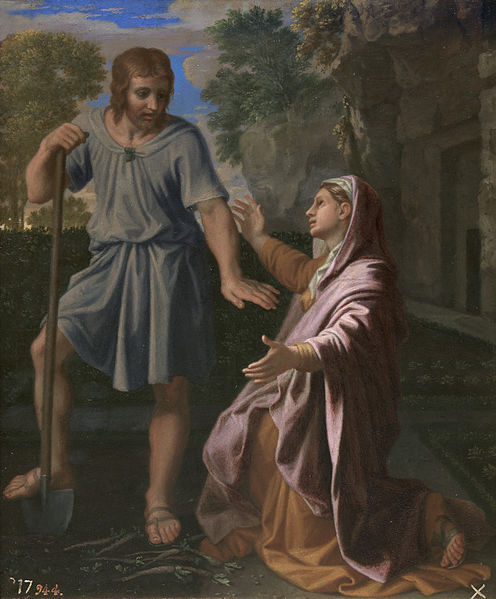
St. Mary Magdalene - July 22 - for children


The feastday of St. Mary Magdalene is today, July 22. Here is the entry on her from the Loyola Kids Book of Signs and Symbols by Amy Welborn 


Amy Welborn


For centuries people learned about the Christian faith through paintings, sculptures, objects, and gestures. Simple images still convey deep messages if we learn how to see and understand them. Award-winning children’s author Amy Welborn has created a friendly and fascinating sourcebook on the signs and symbols of the Catholic faith. The exquisite illustrations throughout will inspire conversation and prayerful reflection for readers of all ages. Each image appears with a brief, child-friendly explanation coupled with a more detailed description on the opposite page.
From the sign of the fish to the Stations of the Cross, from the palm branch to Our Lady of Guadalupe, Loyola Kids Book of Catholic Signs and Symbols will enable children and adults to experience faith with curiosity and wonder.​


Monday, July 20, 2026

The Truth About Mary Magdalene - 4

       From Mary Magdalene: Truth, Legends and Lies by Amy Welborn. 


Chapter 2:


If you were making up the story of the Resurrection from scratch, you would, as a person living in the first century, in the Roman Empire, and presumably as a Jew, only be able to think about this resurrection business in the terms and concepts available to you. And, as N. T. Wright has so ably demonstrated in The Resurrection of the Son of God (Augsburg Fortress Publishers, 2003), even the first-century Jewish world, which did believe in a resurrection of the body, saw it in completely different terms — that it would eventually happen to everyone, at once, at the end of time (Wright, pp. 200-206).
And in general, when you read over the Resurrection accounts in the Gospels, you are immersed in an account in which people are afraid, confused, in awe, and eventually profoundly overjoyed. There is a veil drawn over the core event — the Resurrection itself is never described because, of course, none of the witnesses saw it.
They saw the empty tomb, and they saw the risen Jesus. A clever fabricator and mythmaker would not have woven his account with such nuance, and would probably have offered a direct account of the event itself, perhaps even with a clear explanation of what it all meant. But that’s not what we read, and somehow, ironically, all of the confusion and human frailty is powerful evidence for the truth of the account.
Most importantly for us, a first-century mythmaker would not have featured women as the initial witnesses of these formative events. It is inaccurate to say that first-century Jews did not accept women as reliable witnesses at all. There was, of course, no unified system of law within Judaism, and what was practiced was dependent upon which rabbi’s interpretation of the Law was used. Some rabbis did, indeed, hold the opinion that women were not reliable witnesses, but others disagreed and counted a woman’s witness equal to a man’s.
However, the fact that a woman’s reliability as a witness was disputed, unclear, and not consistently accepted, would, it seems, discourage a fabricator from using women as his source of information that the tomb was indeed empty. It certainly wouldn’t be the first choice to come to mind if your aim was to present a story that was easily credible, would it?
“[And] so that the apostles [the women] did not doubt the angels,Christ himself appeared to them,so that the women are Christ’s apostles and compensate through their obedience for the sin of the first Eve. . . . Eve has become apostle. . . . So that the women did not appear liars but bringers of truth, Christ appeared to the [male] apostles and said to them: It is truly I who appeared to these women and who desired to send them to you as apostles.” (Hippolytus, third century, quoted in Mary Magdalene: Myth and Metaphor, by Susan Haskins [Berkley, 1997], pp. 62-63)


"mary magdalene"